spacer
spacer
spacer
spacer
spacecube
Home
Articles
Concept Hotels
Northern Finland
Central Finland
Southern Finland
Helsinki

WWW.GOFINLAND.NET
 
 
Home arrow Articles arrow Finland Culture Guide A-Z

Finland Culture Guide A-Z Print E-mail

ALVAR AALTO


The best-known modern Finnish architect Alvar Aalto (1898-1976) was born in Kuortane, in Southern Finland. His early works represent functionalism, the main trend of the time; these include the Paimio Sanatorium (1933) and the Library of Viipuri (1935; the town now belongs to Russia).

The first building he designed in Helsinki was his home, Villa Aalto (1936; Riihitie 20). It took 20 years before his second important building in Helsinki was realized: Rautatalo Office Building was built at Keskuskatu 3 in 1954.

Other important buildings designed by Aalto in Helsinki include the National Pensions Institute (1956; Nordenskjöldinkatu 12), the controversial Enso-Gutzeit Building (1962) in Katajanokka, and Finlandia Hall (1971, 1975; Mannerheimintie 13).

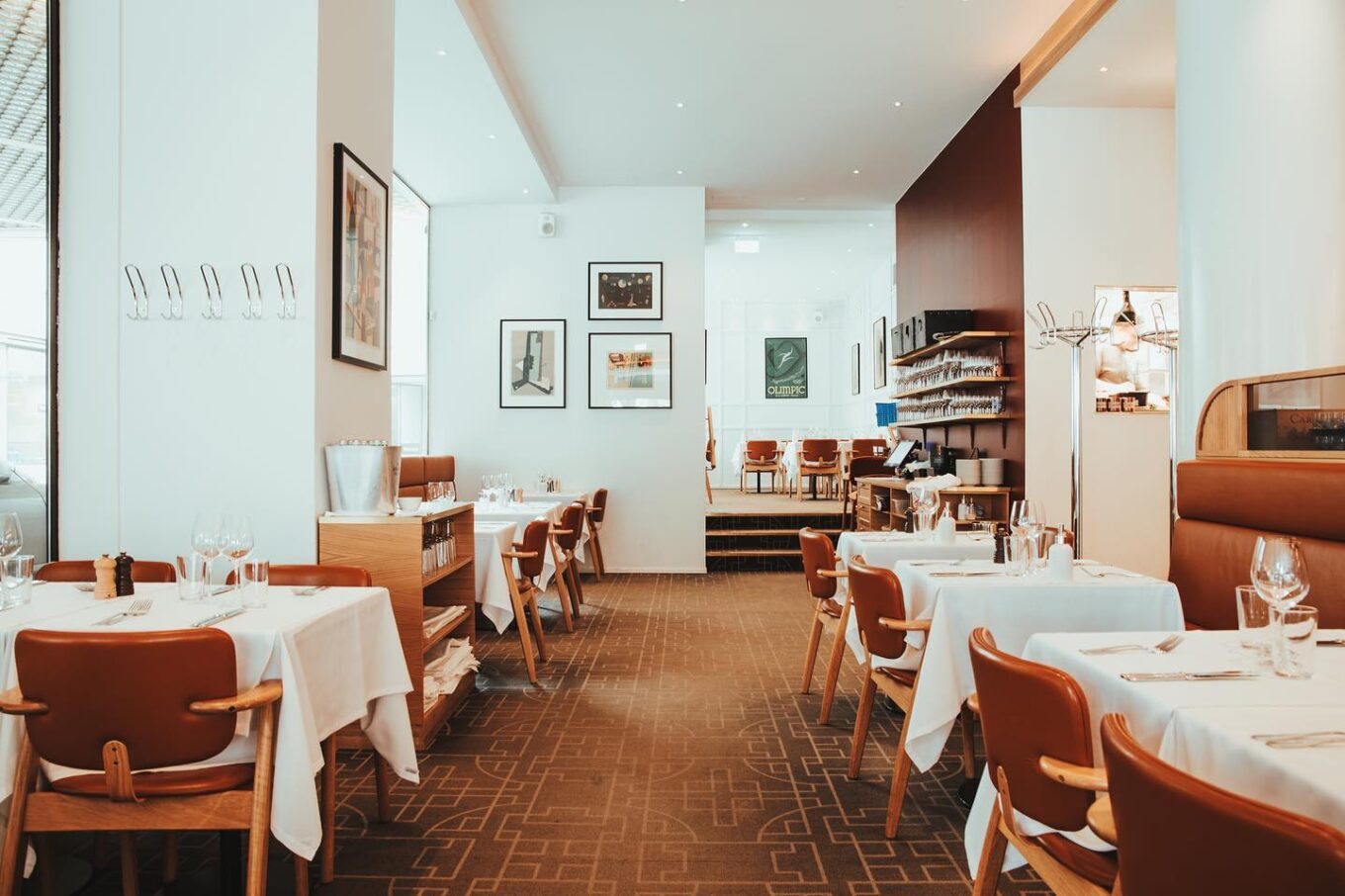
In the beginning of his career, Aalto gained international fame as a furniture designer. He was one of the founders of Artek (Eteläesplanadi 18). A good place to get acquainted with Aalto's design is the restaurant Savoy (Eteläesplanadi 14). Its interior decoration, dating back to 1937, was the first commission of Aino and Alvar Aalto's office.


ARCHIPELAGO


Finland is not only a land of a thousand lakes but also a land of a thousand islands. In fact, Finland contains more islands than any other country in the world. 45 % of the islands are in the Baltic Sea, making the archipelago one of the densest in the world.

There are over 300 islands off Helsinki. Some worth visiting include Suomenlinna, Särkkä, Seurasaari, Pihlajasaari, Uunisaari and Korkeasaari (see Zoo below).

The construction of Suomenlinna fortress was begun in 1748. The fortress island is on the World Heritage list by Unesco. Today the island is popular among artists and visitors. There are several restaurants, a summer theatre, and a number of museums. Suomenlinna is easily accessed by a ferry from the marketplace.

Särkkä
, the first completed part of the Suomenlinna fortifications from the mid-1700's, is still in excellent condition. It houses a yacht club, a summer theatre, and a summer restaurant. Catch a boat from the pier by Cafe Ursula (Ehrenströmintie 3).

Seurasaari Open-Air Museum
was established in 1909. A visit to Seurasaari is a fast way of getting to know traditional Finnish life and architecture: over the years over a hundred buildings have been moved there from all over Finland. Seurasaari can be accessed by bus # 24 from downtown or on foot.

Pihlajasaari
is actually two islands connected by a foot bridge. Its smooth rocks are popular among the locals for sun bathing. You can get to Pihlajasaari by a boat from the end of Laivurinkatu.

Uunisaari
is also a nice place for sunbathing and swimming; beaches and water are clean.

Klippan
houses a restaurant. Ferries to Klippan leave next to the Olympia Terminal.


DICTIONARY


Kiitos
- Thank you.
Pitkä
- Large beer, please.
Hyvää huomenta
- Good morning.
Hyvää yötä
- Good night.
Mennäänkö meille vai teille?
- My place or your place?
Nokiastani loppui virta
- I need to charge my cell phone.
Missä minä olen?
- Where am I?
Taksi
- Taxi.
Sulje suusi, kalanaama!
- Shut your face, you fish face!
Öööö...Ääää...
- (Just wait, some Finn is trying to tell you something.)


JUHANNUS


In the latter half of June when the days are long and nights are white, it is time for Juhannus, the Midsummer festival. Most people desert cities and head for the country to celebrate this great Finnish festival.

The origins of Juhannus go back to pagan times. One of the high points of the celebrations is the burning of the bonfire by the sea or a lake on Midsummer Eve.

Juhannus is also a time for love: there are many magic tricks to secure your lover. For example, a young woman collects seven different kinds of flowers, puts them under her pillow, and sees her future husband in her dreams.

But, unfortunately, Juhannus is also another great Finnish drinking festival. Every Juhannus around 20 people die; most of them are men who fall out of boats drunk and drown.

During Juhannus, Helsinki is like a small town from the past: people and cars have disappeared; even most shops and restaurants are closed. For traditional Midsummer Eve festivities in the city visit the Seurasaari Open-Air Museum for bonfires, folk music and dancing, and a traditional Midsummer wedding open to the public.


MOOMINS


What do the Japanese know about Finland? Santa Claus and Moomins! Moomins have even got their picture on the Finnair plane to Tokyo.

After the Second World War, a strange, clumsy, and sweet figure appeared in the Swedish language literature in Finland: this was Moomin (in Swedish mumin, in Finnish muumi). The first Moomin book, Småtrollen och den stora översvärmingen (Moomin and the Destructive Flood) was published in 1945. Created by the Finnish-Swedish writer Tove Jansson, today moomins are known all over the world and are among the most translated Finnish books.

The basic message in Moomin books is humane and "Taoistic." This makes them good reading also for adults. In the early stories danger and troubles are caused by storms, floods, or comets. Later, problems become more spiritual: loneliness, freedom, finding one's own identity.

Moomin Valley
is a special section in the Tampere City Library (Hämeenpuisto 20). You can also visit the Moomin World in Naantali (Mannerheiminkatu 21).


JEAN SIBELIUS


The importance of Jean Sibelius (1865-1957) as a creator of Finnish national identity is manifested in his tone poem Finlandia. This was written in the middle of the heaviest period of Russianization in 1899.

Sibelius was interested in Finland and the North. His symphony Kullervo, which expresses the old Finnish spirit of Kalevala, was premiered in Helsinki in the spring of 1892. The performance, conducted by Sibelius himself, was a sensation.

Sibelius composed his First (numbered) Symphony in 1899. His masterpieces also include the Violin Concerto of 1905.

In 1904 Sibelius followed the trend set by many other artists of the time, and moved with his family to Lake Tuusula, 45 kilometres north of Helsinki. Their home, Ainola, was designed by Lars Sonck, one of the leading architects of the time. Ainola is open for the public in summer.

Sibelius stopped composing soon after his Seventh Symphony in 1924. He died at Ainola at the age of 91. Sibelius Monument in Helsinki was sculpted by Eila Hiltunen in 1967.


KOSKENKORVA


The Finns also have a bent for drink, even though there is no wine here whatsoever, except for illicit tavern keeping, which is harshly suppressed. But, all the way to
St. Petersburg, the Finn will drink himself into forgetfullness, lose his money, horde, bridle, and return home poorer than a church rat.

- Mikhail Saltykov-Shchedrin: Life's Little Things (visited Finland in 1886)


Finland has no national drink, but if one were chosen, a strong candidate would be Koskenkorva Viina, usually called simply "Kossu". Sometimes this "power drink" is even drunk straight from the bottle. Another popular and famous Finnish liquor is Finlandia Vodka. Both are made of grain, but the distillation methods are different, giving Finlandia Vodka a drier taste.

One of Koskenkorva's many derivatives is Salmiakki Koskenkorva, or "Salmiakki Kossu" or "Salmari" made by dissolving strong salted licorice into the clear liquor, pleasantly disguising the raw flavor of alcohol. The history of this dangerously sweet black drink is short but colorful: introduced in the early 1990s, it became a huge success among Finns and foreigners alike. Salmiakki Kossu is still the number one drink in many pubs and night clubs in Finland.

Beer is also very popular among Finns. Beer is categorized into three groups according to its alcohol content: category I is practically non-alcoholic; III is light (˜ 4,5 %); IV is stronger (˜ 5,6 %).

Very often Finns drink just to get drunk. Not even the highest prices in Europe can stop them; in fact, a Finn consumes about 8,2 litres of alcohol a year. Part of the scene on a Friday or Saturday night in Helsinki are staggering drunks mumbling nonsense. Dangerous as they may seem, they are usually not aggressive - unless provoked.

Alcohol is almost a mythical cultural icon and an important part of life in Finland. One explanation for alcohol's status comes from history. The 13-year old Prohibition was abolished in 1932, but compared to Central Europe it is still not that simple to buy liquor.


"PERKELE!"


Their character can tolerate cold and toil and what many would consider to be insufferable famine.

- Christian Friedrich Weber: Das Veränderte Russland 1721

The Finnish language has many colloiquial cusses: "Perkele" ("God damn!"; literally "the devil") is one of the most useful ones. The Finnish rolled r's make "perkele" very defiant. Other popular cuss words in Helsinki are, for example, "vittu" ("fuck"), "paska" ("shit"), and "saatana" (literally "Satan").

Something peculiarly Finnish is crystallized in these cuss words. They may be proof of our vulgarity, but, on the other hand, they are spontaneous expressions of Finnish sisu (guts). We may not be the most civilized people in the world, but we do not lack perseverance or willingness to work hard. "Perkele, we will make it!" exemplifies Finnish hardheadedness, but also self-sacrifice - be it sports, military defence in the Second World War, or rebuilding our nation. Lyrics of "Total War - Winter War" by a provocative rock group Impaled Nazarene say it all:

Do you want total war? Yes, we want total war!
Do you want fucking war? Yes, we want fucking war!
November 1939, eastern front line
Machine gun fire, defending our pride
Four months of hell, thousands of bombs fell
Go ahead and bring it on, SUOMI FINLAND PERKELE!
PERKELE!


TIPS AND SERVICE


In Finland, service charges are included in restaurant and hotel bills. But you can be sure that waiters and waitresses will not say no to a tip.


ZOO


Situated just off the Helsinki shore, Korkeasaari Island is like a Noah's Ark. Opened in 1889, Korkeasaari specializes in animals of the northern climate.

There are also many interesting and exotic foreign animals from all over the world, such as the snow leopard and red panda. The South America House is hugely popular.

Korkeasaari Zoo is open throughout the year. You can get there by waterbus from the marketplace or Hakaniemi, or by the bridge from Mustikkamaa (take a metro or bus 16 to Kulosaari - it is about one km walk from the Kulosaari metro station).
< Previous   Next >


 artificialwebdezign
© 2010 Viisi Tähteä, Unione Oy 
Väinämöisenkatu 19, 00100 Helsinki Finland. 
spacer